Mindful AI Integration
Mindful AI Integration
Mindful AI Integration
Visit site
Visit site
Role
Product designer
Timeline
2025 - Present
Platform
Saas, Web
Team
Cross-functional
Visit site
Overview
Overview
Overview
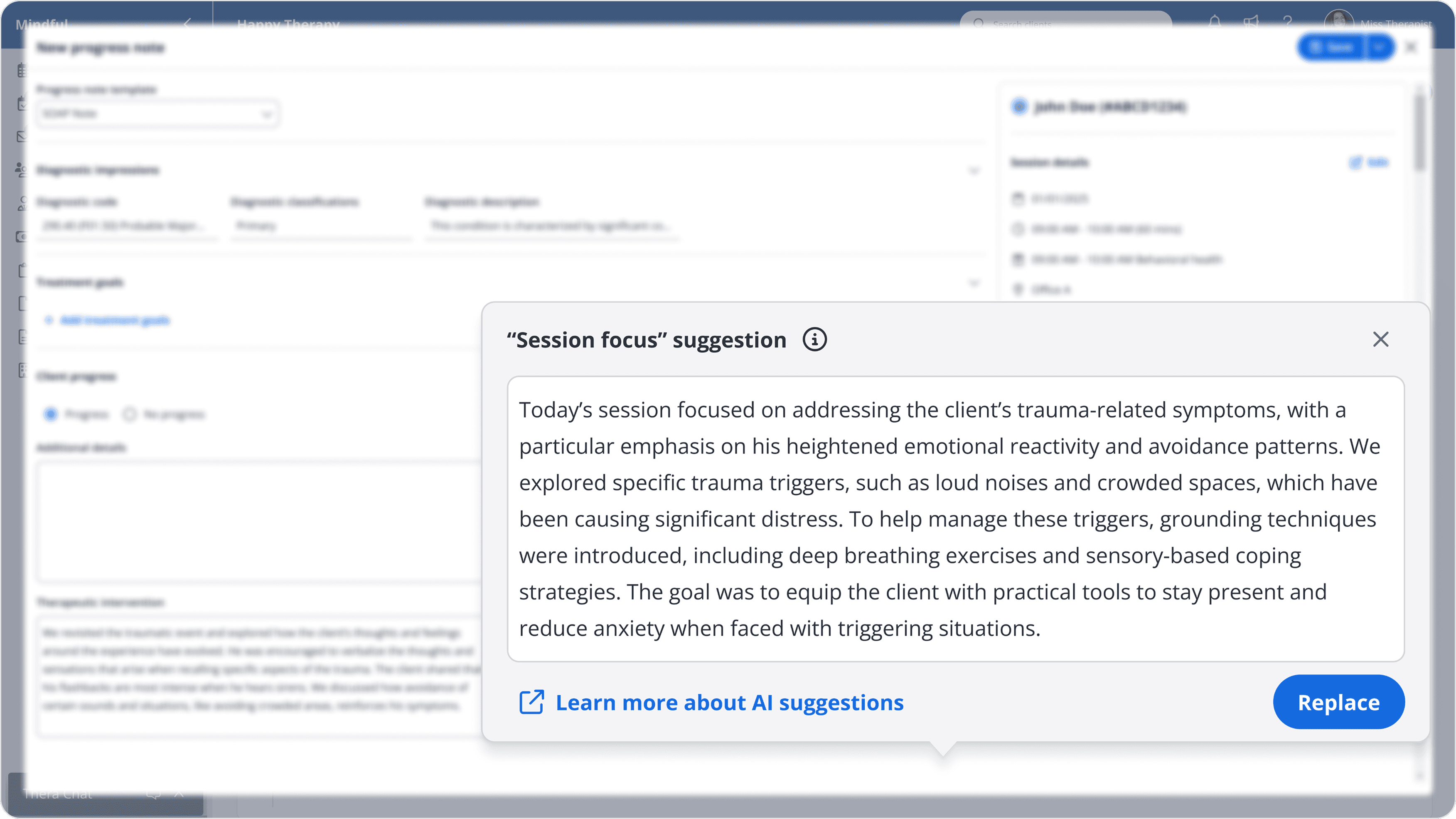
Mindful AI, publicly known as " AI Notes Enhancement", is a feature designed to enhance the clinical space in mental and behavioral health. As the lead product designer, the short-term goal was to launch an AI tool in the product. Knowing how clinicians were both curious and cautious, the long-term goal was to align clinical care and documentation with market shifts while making therapy more intuitive and efficient.
Mindful AI, publicly known as " AI Notes Enhancement", is a feature designed to enhance the clinical space in mental and behavioral health. As the lead product designer, the short-term goal was to launch an AI tool in the product. Knowing how clinicians were both curious and cautious, the long-term goal was to align clinical care and documentation with market shifts while making therapy more intuitive and efficient.
Mindful AI, publicly known as " AI Notes Enhancement", is a feature designed to enhance the clinical space in mental and behavioral health. As the lead product designer, the short-term goal was to launch an AI tool in the product. Knowing how clinicians were both curious and cautious, the long-term goal was to align clinical care and documentation with market shifts while making therapy more intuitive and efficient.
Role
Role
Product designer
Product designer
Timeline
Timeline
2025 - Present
2025 - Present
Platform
Platform
SaaS, Web
SaaS, Web
Team
Team
Cross-functional
Cross-functional
Problem
Problem
Problem
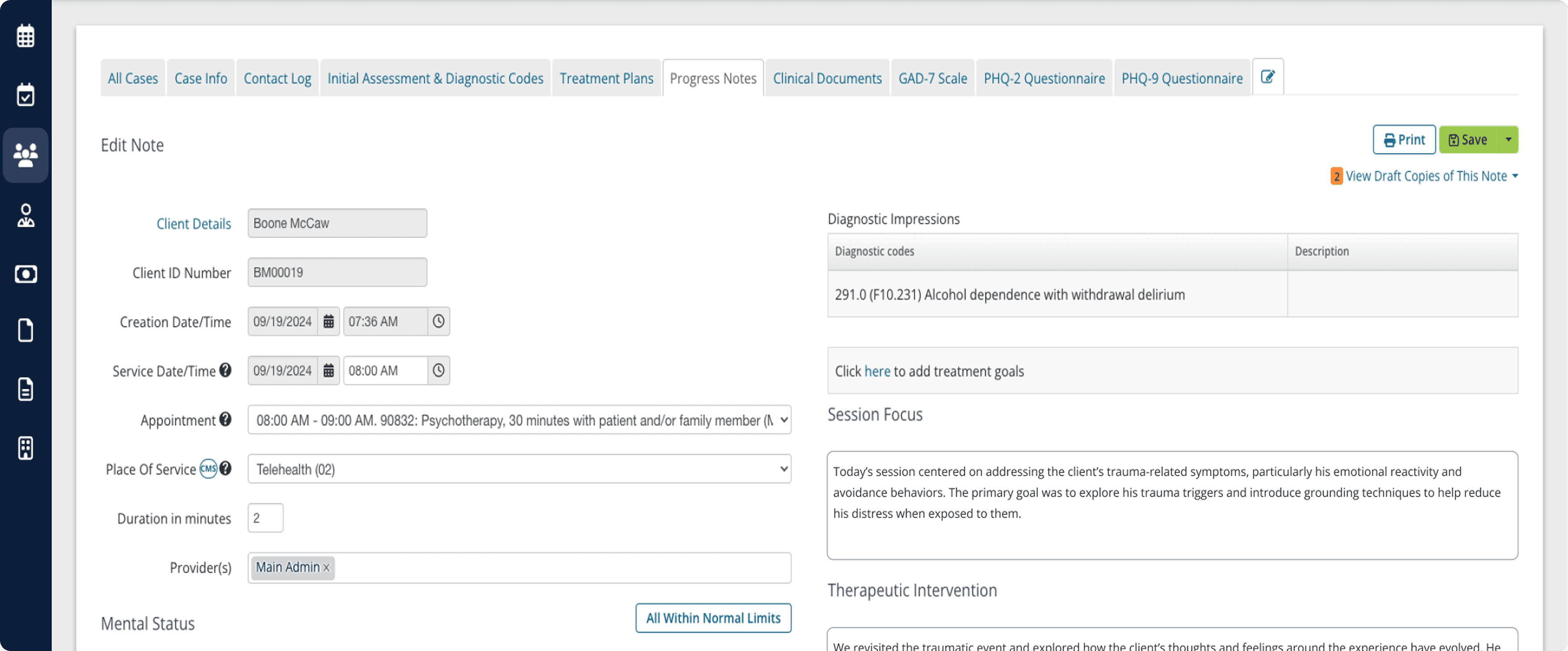
Clinicians needed a way to use AI in their daily note taking workflows without risking patient data or slowing themselves down. At the same time, the business needed a proprietary, HIPAA-compliant assistant that could drive adoption and differentiate the platform without relying on third-party AI tools.
Clinicians needed a way to use AI in their daily note taking workflows without risking patient data or slowing themselves down. At the same time, the business needed a proprietary, HIPAA-compliant assistant that could drive adoption and differentiate the platform without relying on third-party AI tools.
Clinicians needed a way to use AI in their daily note taking workflows without risking patient data or slowing themselves down. At the same time, the business needed a proprietary, HIPAA-compliant assistant that could drive adoption and differentiate the platform without relying on third-party AI tools.
Solution
Solution
Solution
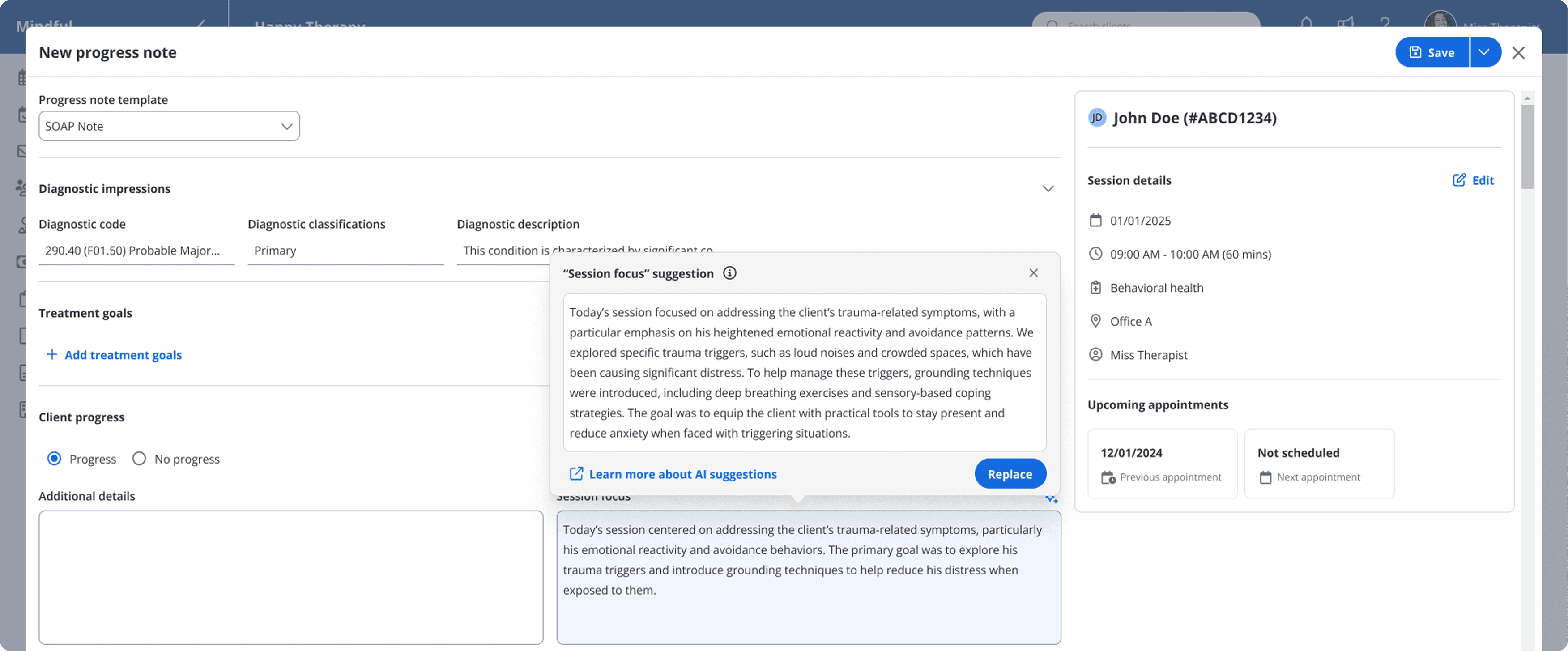
I designed an in-house AI assistant that felt familiar to clinicians and their progress note workflows. To ensure it would actually be adopted, I grounded the solution in a phased approach by using real patterns, benchmarking competitor tools, UI iterations, and A/B tested validation with users.
I designed an in-house AI assistant that felt familiar to clinicians and their progress note workflows. To ensure it would actually be adopted, I grounded the solution in a phased approach by using real patterns, benchmarking competitor tools, UI iterations, and A/B tested validation with users.
I designed an in-house AI assistant that felt familiar to clinicians and their progress note workflows. To ensure it would actually be adopted, I grounded the solution in a phased approach by using real patterns, benchmarking competitor tools, UI iterations, and A/B tested validation with users.
Research & analysis
Research & analysis
Research & analysis
To develop a usable solution, I partnered with UX research to conduct a competitive analysis and ideate with internal teams.
To develop a usable solution, I partnered with UX research to conduct a competitive analysis and ideate with internal teams.
To develop a usable solution, I partnered with UX research to conduct a competitive analysis and ideate with internal teams.
Competitive analysis
Competitive analysis
Competitive analysis
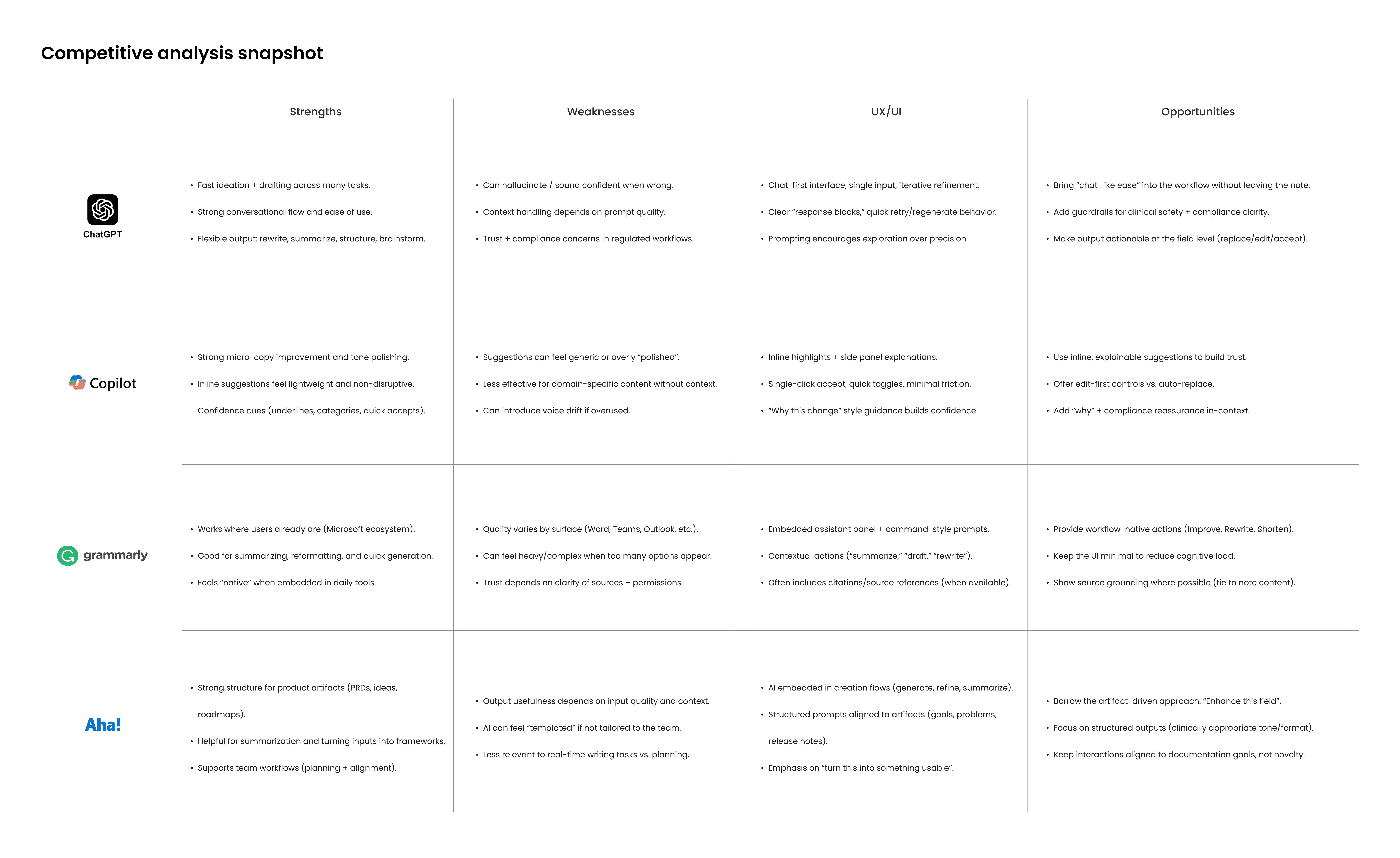
I analyzed AI tools like ChatGPT, Gemini, Copilot, Grammarly, and Aha to understand the trusted interaction patterns. The insights helped shape familiar experiences while still forming an AI-assistant for clinical workflows.
I analyzed AI tools like ChatGPT, Gemini, Copilot, Grammarly, and Aha to understand the trusted interaction patterns. The insights helped shape familiar experiences while still forming an AI-assistant for clinical workflows.
I analyzed AI tools like ChatGPT, Gemini, Copilot, Grammarly, and Aha to understand the trusted interaction patterns. The insights helped shape familiar experiences while still forming an AI-assistant for clinical workflows.
Design approach
Design approach
Design approach
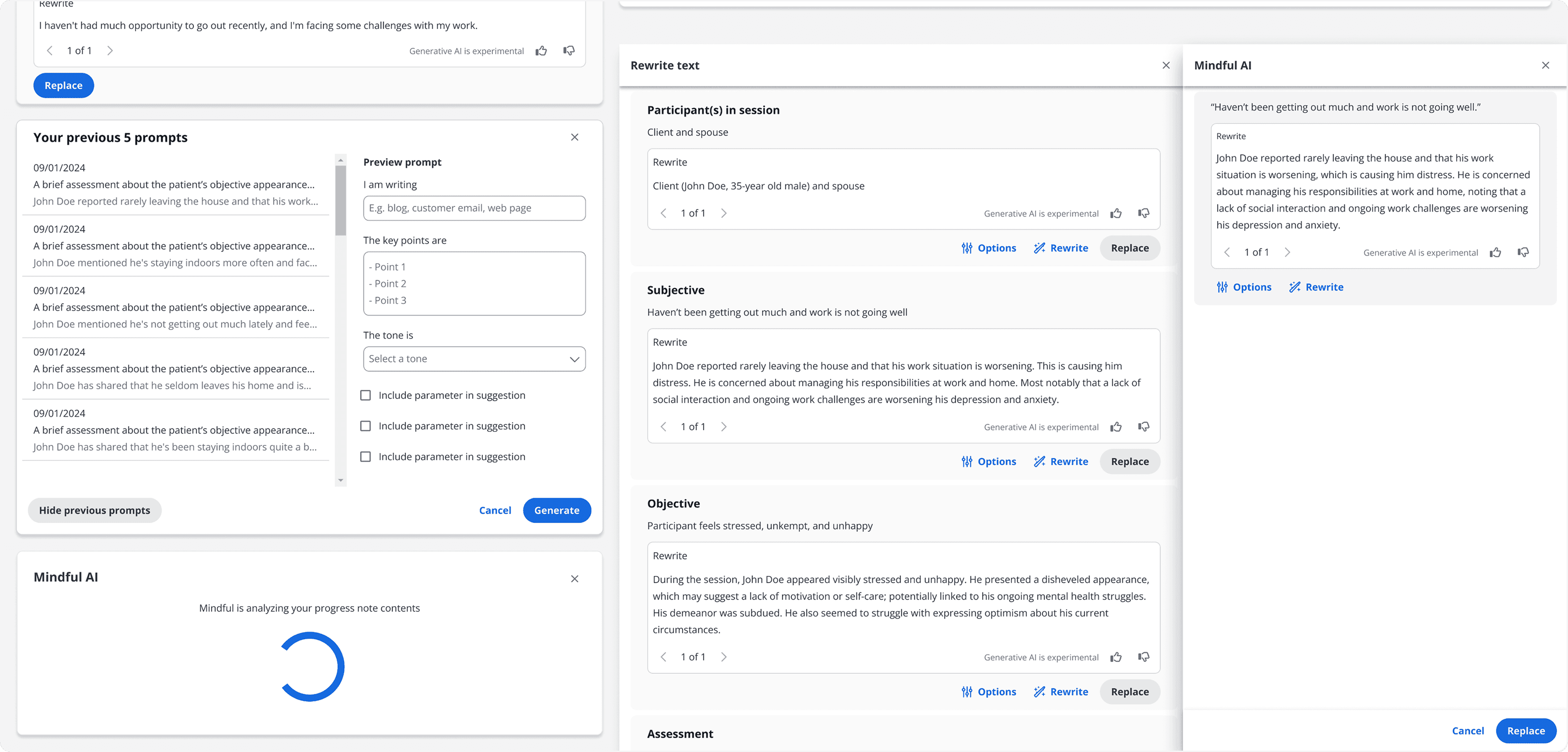
As an approach, I rapidly explored multiple AI concepts through internal reviews, grounding ideas in familiar interactions while anticipating future use cases. Eventually, two ideations were selected to test with users.
As an approach, I rapidly explored multiple AI concepts through internal reviews, grounding ideas in familiar interactions while anticipating future use cases. Eventually, two ideations were selected to test with users.
As an approach, I rapidly explored multiple AI concepts through internal reviews, grounding ideas in familiar interactions while anticipating future use cases. Eventually, two ideations were selected to test with users.
Testing
Testing
Testing
To validate the concepts and gauge user impressions, I conducted A/B usability tests with 16 participants who regularly manage progress notes: practice owners, supervisors, and therapists. Users were asked to generate, review, and accept AI suggestions within the note interface.
To validate the concepts and gauge user impressions, I conducted A/B usability tests with 16 participants who regularly manage progress notes: practice owners, supervisors, and therapists. Users were asked to generate, review, and accept AI suggestions within the note interface.
To validate the concepts and gauge user impressions, I conducted A/B usability tests with 16 participants who regularly manage progress notes: practice owners, supervisors, and therapists. Users were asked to generate, review, and accept AI suggestions within the note interface.
Field level AI popover
Field level AI popover
Field level AI popover
The first concept introduced a field-level AI popover that let clinicians enhance specific note fields with contextual suggestions. Users could review and accept replacements inline, with clear HIPAA compliance indicators to support trust and transparency.
The first concept introduced a field-level AI popover that let clinicians enhance specific note fields with contextual suggestions. Users could review and accept replacements inline, with clear HIPAA compliance indicators to support trust and transparency.
The first concept introduced a field-level AI popover that let clinicians enhance specific note fields with contextual suggestions. Users could review and accept replacements inline, with clear HIPAA compliance indicators to support trust and transparency.
Test findings
Test findings
Test findings
Clinicians quickly understood which fields were AI-enabled and how to apply suggestions.
The vertical view made it easy to distinguish between original and generated text.
Users asked about clinical accuracy, HIPAA compliance, and how AI decisions were made.
Overall, most clinicians liked being able to accept and edit suggestions without disrupting their workflow.
Clinicians quickly understood which fields were AI-enabled and how to apply suggestions.
The vertical view made it easy to distinguish between original and generated text.
Users asked about clinical accuracy, HIPAA compliance, and how AI decisions were made.
Overall, most clinicians liked being able to accept and edit suggestions without disrupting their workflow.
Clinicians quickly understood which fields were AI-enabled and how to apply suggestions.
The vertical view made it easy to distinguish between original and generated text.
Users asked about clinical accuracy, HIPAA compliance, and how AI decisions were made.
Overall, most clinicians liked being able to accept and edit suggestions without disrupting their workflow.
Note level AI modal
Note level AI modal
Note level AI modal
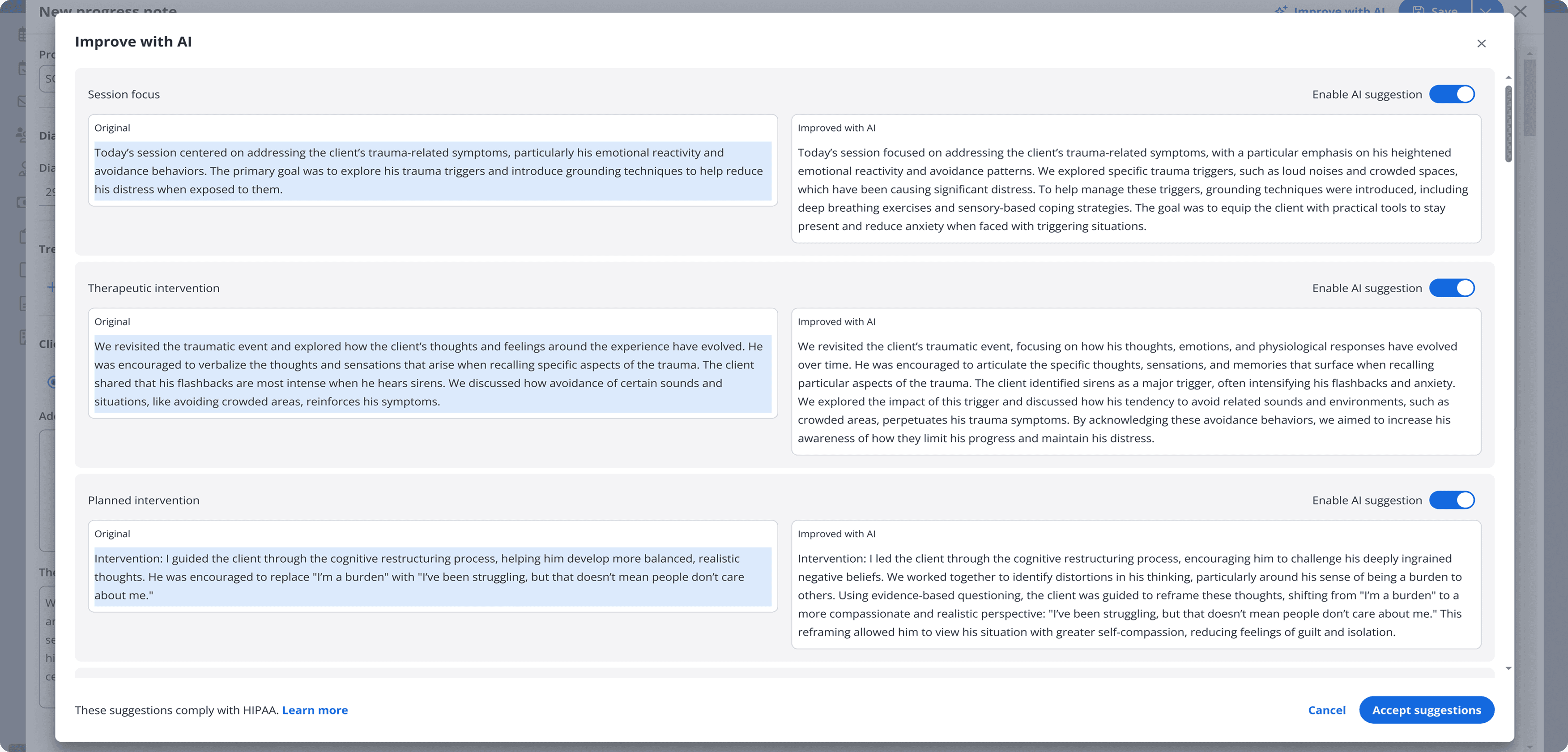
The second concept used a note-level AI modal to enhance multiple fields in a single action. Clinicians could review original and suggested content side-by-side and selectively apply changes, streamlining updates while preserving control.
The second concept used a note-level AI modal to enhance multiple fields in a single action. Clinicians could review original and suggested content side-by-side and selectively apply changes, streamlining updates while preserving control.
The second concept used a note-level AI modal to enhance multiple fields in a single action. Clinicians could review original and suggested content side-by-side and selectively apply changes, streamlining updates while preserving control.
Test findings
Test findings
Test findings
The horizontal layout helped clinicians review and apply multiple suggestions quickly.
While some valued the time savings, others felt reviewing too many AI suggestions at once could be overwhelming.
Questions around clinical accuracy and HIPAA compliance mirrored those from the field-level concept.
Most users were open to the approach and interested in future refinements.
The horizontal layout helped clinicians review and apply multiple suggestions quickly.
While some valued the time savings, others felt reviewing too many AI suggestions at once could be overwhelming.
Questions around clinical accuracy and HIPAA compliance mirrored those from the field-level concept.
Most users were open to the approach and interested in future refinements.
The horizontal layout helped clinicians review and apply multiple suggestions quickly.
While some valued the time savings, others felt reviewing too many AI suggestions at once could be overwhelming.
Questions around clinical accuracy and HIPAA compliance mirrored those from the field-level concept.
Most users were open to the approach and interested in future refinements.
Implementation
Implementation
Implementation
Users responded positively to testing, confirming strong interest in AI-assisted documentation alongside the need for a trust-first rollout. The field-level AI popover was prioritized for handoff and initial release due to its lower risk and faster implementation, while bulk editing, feedback tools, and tone controls were scheduled for future iterations.
Users responded positively to testing, confirming strong interest in AI-assisted documentation alongside the need for a trust-first rollout. The field-level AI popover was prioritized for handoff and initial release due to its lower risk and faster implementation, while bulk editing, feedback tools, and tone controls were scheduled for future iterations.
Users responded positively to testing, confirming strong interest in AI-assisted documentation alongside the need for a trust-first rollout. The field-level AI popover was prioritized for handoff and initial release due to its lower risk and faster implementation, while bulk editing, feedback tools, and tone controls were scheduled for future iterations.
Impacts & learnings
Impacts & learnings
Impacts & learnings

90%
90%
90%
Clinician satisfaction with AI-assisted documentation
Clinician satisfaction with AI-assisted documentation
Clinician satisfaction with AI-assisted documentation
85%
85%
85%
Perceived quality-of-life improvement
Perceived quality-of-life improvement
Perceived quality-of-life improvement
2x
2x
2x
Faster documentation completion & reviews
Faster documentation completion & reviews
Faster documentation completion & reviews
Post-release, clinicians successfully adopted the assistive feature into their workflows. Designing Ensora’s first AI feature required close collaboration across product and engineering to navigate technical constraints, edge cases, and evolving requirements. Through rapid iteration and shared alignment, we delivered a trustworthy experience that balanced innovation with the responsibility of supporting real clinical work.
Post-release, clinicians successfully adopted the assistive feature into their workflows. Designing Ensora’s first AI feature required close collaboration across product and engineering to navigate technical constraints, edge cases, and evolving requirements. Through rapid iteration and shared alignment, we delivered a trustworthy experience that balanced innovation with the responsibility of supporting real clinical work.
Post-release, clinicians successfully adopted the assistive feature into their workflows. Designing Ensora’s first AI feature required close collaboration across product and engineering to navigate technical constraints, edge cases, and evolving requirements. Through rapid iteration and shared alignment, we delivered a trustworthy experience that balanced innovation with the responsibility of supporting real clinical work.